
by Sally-Anne Peterson | Mar 31, 2025 | For Buyers, For Sellers
As the weather warms up, the spring housing market kicks into high gear, creating an exciting opportunity for both homebuyers and sellers. If you’re considering buying or selling a home this season, it’s essential to understand the key trends that define the spring market. In this article, we’ll explore what you can expect from the spring housing market and how to make the most of these changes.
1. Increased Inventory in the Spring Housing Market
Spring is one of the best times to buy a home, thanks to the increase in inventory. More homeowners choose to list their properties as the weather improves, gardens bloom, and families prepare to move before the new school year begins. This boost in available homes offers buyers a wider selection, making it easier to find your dream home. For sellers, this is the perfect opportunity to capitalize on the increased demand. However, with more competition, it’s important for sellers to price their homes competitively and for buyers to act quickly.
Pro Tip: Buyers should start their home search early in spring to have the best selection of homes. Sellers, on the other hand, should prepare their homes to stand out in a crowded market.
2. Rising Home Prices in Spring
One of the key trends in the spring housing market is rising home prices. With more buyers entering the market and limited inventory in some areas, demand often outweighs supply, leading to higher prices. Multiple offer situations become more common, driving up the final sale price. If you’re a seller, spring is an excellent time to list your home for a potential price increase. Buyers, however, may need to adjust their expectations and be prepared for competitive pricing in desirable neighborhoods.
Tip for Buyers: Work with a real estate agent to identify pricing trends in your area and be ready to negotiate if the asking price is higher than expected.
3. More Competition Among Homebuyers
Spring is the season when most buyers begin their home search. Whether it’s because they want to move before the summer or need to settle before the school year starts, more buyers flock to the market. This increased competition can lead to bidding wars for popular homes. As a buyer, this means you’ll need to act fast, make competitive offers, and possibly even bid above the asking price. For sellers, it’s a prime time to take advantage of this surge in demand.
Buyer Tip: To stand out in a competitive market, get pre-approved for a mortgage and be ready to make a strong offer when you find the right home.
4. Potential for Favorable Mortgage Interest Rates
While mortgage rates can fluctuate, spring is often a time when interest rates remain relatively low compared to historical averages. If you’re a buyer, this could mean lower monthly payments and more purchasing power. However, it’s important to monitor the market, as the Federal Reserve could raise interest rates, impacting your mortgage rate. If you lock in a favorable rate early, you could save a significant amount of money over the life of your loan.
Tip for Buyers: Shop around for the best mortgage rates and consider locking in a rate if you find one that suits your budget. Even a small difference in interest rates can make a big impact on your long-term payments.
Conclusion
The spring housing market is one of the most active times of the year, and it comes with key trends that buyers and sellers should be prepared for. From increased inventory and rising prices to more competition and potentially favorable interest rates, understanding what to expect can help you navigate the market successfully. Whether you’re looking to buy or sell, this spring could be the perfect time to make a move in the real estate market. Stay informed, plan ahead, and work with a trusted real estate professional to make the most of this dynamic season.

by Sally-Anne Peterson | Feb 25, 2025 | For Sellers
2025 could be the year you’ve been waiting for! According to a recent NerdWallet survey, 15% of people plan to buy a home this year — a record high for this survey. Whether you’re considering selling or just curious about the market, this increase in buyer intent signals that 2025 is shaping up to be a great year for sellers.
Ready to see why now might be your golden opportunity to sell? Let’s dive in!
Why Buyer Demand is Booming in 2025
Over the past few years, the percentage of buyers planning to purchase a home has hovered between 9-11%. But this year? We’re seeing a significant jump to 15% — signaling that more buyers are gearing up to take the plunge.
What does this mean for you as a seller? Pent-up demand is finally being released, and buyers are more motivated than ever. While we may not see the huge waves of activity we saw in years past, there will definitely be more buyers in the market this year, and many are eyeing the peak spring season to make a move.
What’s Fueling the Surge in Buyers?
So, why the sudden uptick in buyer activity? Here are a few key reasons:
- Buyer Confidence is Back: After a few years of uncertainty, many buyers are feeling ready to move forward and make that big purchase.
- Financial Prep: Buyers have had time to save for a down payment and are now in a stronger financial position to buy.
- A Growing Sense of Urgency: Some buyers who’ve been waiting are no longer willing to sit on the sidelines. They’re jumping back in this year!
And guess what? 54% of potential buyers have already started looking at homes online. That’s right — the buyers are out there, and they’re eager to find their next home.
Why 2025 is a Prime Time to Sell Your Home
With more motivated buyers in the market, it’s the perfect time for sellers to list their homes. But how can you ensure your home stands out from the competition? Here’s how:
- Partner with the Right Agent: A skilled real estate agent can help you price your home competitively, market it effectively, and negotiate the best deal.
- Prep Your Home for Sale: A little TLC goes a long way! Make sure your home is in top shape — from simple upgrades to boosting curb appeal — to wow potential buyers.
- List Before the Rush: Spring is when the market really heats up. Listing your home a bit ahead of time can ensure it’s ready when the majority of buyers are actively searching.
The Secret to Getting Your Home Noticed
Now, let’s talk about the wow factor — what will buyers love most about your home? Whether it’s that spacious kitchen, the beautiful backyard, or a freshly renovated bathroom, highlight what makes your home unique in your listing. When buyers are scrolling through countless listings online, you want yours to catch their eye instantly.
Maximize Your Home’s Appeal with These Tips
- Stage Your Home: A well-staged home helps buyers visualize themselves living there. It’s worth investing time in making your home feel inviting and spacious.
- Price It Right: Overpricing can turn buyers away, but a strategically priced home can spark bidding wars.
- Professional Photos Are Key: Buyers want to see your home in its best light — literally! High-quality photos make your listing stand out online.
- Highlight Your Home’s Best Features: Whether it’s the view, the location, or custom features, make sure these details are front and center in your listing.
Why Spring is the Best Time to Sell Your Home
Spring is traditionally the busiest homebuying season, and with more buyers entering the market, it’s the time to strike while the iron’s hot. So, if you’re thinking about selling, spring could be your window of opportunity to showcase your home and attract serious buyers.
Ready to Sell? Here’s What You Can Do Next:
- Connect with an Expert Agent: The right agent will know the ins and outs of the market and help you navigate the process smoothly.
- Get Your Home Market-Ready: Take the time to make any necessary repairs or improvements and get your home looking its best.
- List Early: Beat the spring rush and get your home on the market as soon as possible to capture the most attention.
The Bottom Line: 2025 is Your Year to Sell!
With increased buyer interest and spring around the corner, 2025 is shaping up to be a fantastic year for sellers. With the right strategy, your home could be one of the most sought-after properties in your area. Don’t wait any longer — connect with a trusted real estate agent and start preparing your home for sale today!
Want to make the most of this year’s real estate market? Let’s talk! Reach out today to get your home ready for sale and make sure it’s front and center when buyers start looking.

by Sally-Anne Peterson | Jan 1, 2025 | For Sellers
In recent years, eco-friendly living has become more than just a trend—it’s now a crucial consideration for homeowners and buyers alike. As the focus on sustainability grows, incorporating green features into your home can not only reduce your environmental impact but also increase its value. From energy-efficient systems to sustainable materials, here’s how eco-friendly upgrades can boost your home’s market value and attract potential buyers.
1. Energy Efficiency: Saving Money and the Environment
Energy-efficient homes are more attractive to buyers because they promise lower utility bills and a reduced carbon footprint. Features like energy-efficient appliances, upgraded insulation, and smart thermostats can make a significant difference in reducing a home’s energy consumption. As buyers become more aware of the financial and environmental benefits of these features, homes with these systems are often priced higher than comparable properties.
- Smart Thermostats: These systems optimize energy use by adjusting temperatures based on your lifestyle, saving on heating and cooling costs.
- Energy-Efficient Windows: Modern windows designed to prevent heat loss in the winter and block heat in the summer can make a big difference in a home’s overall energy consumption.
Investing in these upgrades not only saves money but also enhances your home’s appeal in a competitive market.
2. Solar Panels: Harnessing the Power of the Sun
Solar panel installation is one of the most impactful eco-friendly upgrades you can make. Solar energy significantly reduces reliance on the grid, leading to lower electricity costs and increasing energy independence. As more homeowners seek ways to reduce their energy bills, solar panels are becoming a valuable selling point.
- Lower Utility Costs: Solar panels can cut or eliminate electricity bills, which is especially beneficial in areas with high energy costs.
- Tax Incentives: Homeowners who install solar panels can take advantage of government rebates and incentives, further boosting the appeal of this green upgrade.
Solar-powered homes are often sold at a premium, with buyers recognizing the long-term savings and environmental benefits.
3. Water Conservation: A Smart Investment for the Future
Water-saving features are not just good for the environment—they also help reduce water bills and increase a home’s value. Low-flow fixtures and efficient irrigation systems are becoming standard in modern homes, especially in areas with water shortages.
- Low-Flow Fixtures: Installing low-flow toilets, showerheads, and faucets can reduce water consumption without sacrificing performance.
- Rainwater Harvesting Systems: Collecting and storing rainwater for landscaping or other non-potable uses can help conserve precious water resources.
Eco-conscious buyers are drawn to homes with water-efficient features, making these upgrades a great investment.
4. Sustainable Materials: Green Choices for a Stronger, Healthier Home
The use of sustainable materials is one of the most effective ways to make your home eco-friendly while increasing its value. Building or renovating with eco-friendly materials like bamboo flooring, recycled steel, and non-toxic paints makes your home more appealing to environmentally conscious buyers.
- Durability: Many sustainable materials are more durable and require less maintenance than traditional alternatives, reducing long-term costs.
- Healthier Living: Non-toxic finishes and low-VOC paints improve indoor air quality, which is an attractive feature for health-conscious buyers.
By choosing green materials, you’re not only making a responsible choice for the planet but also adding lasting value to your home.
5. Smart Home Technology: A Convenient Way to Save Energy
Incorporating smart home technology into your home allows for more efficient energy management, which is appealing to eco-conscious buyers. Systems like smart thermostats, lights, and appliances can be controlled remotely and programmed to optimize energy use.
- Smart Lighting: Automatically dimming or turning off lights when not in use helps reduce electricity consumption.
- Home Automation: Advanced systems can manage heating, cooling, and lighting, allowing homeowners to monitor and control their energy use more effectively.
Smart homes are seen as more modern and convenient, making them a highly desirable feature for today’s buyers.
6. Indoor Air Quality: A Healthier Home for a Healthier You
Air quality is an increasingly important factor in home buying decisions, especially for buyers with respiratory issues or allergies. Eco-friendly homes with proper ventilation, air filtration systems, and non-toxic materials are more likely to attract these health-conscious buyers.
- Ventilation Systems: Properly vented homes reduce indoor pollutants and improve overall air quality.
- Non-Toxic Finishes: Choosing non-toxic paints, finishes, and materials eliminates harmful chemicals like VOCs (volatile organic compounds), making the home healthier to live in.
A focus on clean, healthy air can be a significant selling point, making homes with these features stand out in a competitive market.
7. Green Roofs and Insulation: Enhancing Efficiency and Aesthetics
Green roofs and improved insulation are two eco-friendly upgrades that not only increase energy efficiency but also enhance a home’s visual appeal.
- Green Roofs: These roofs, which feature vegetation, offer insulation benefits, reduce stormwater runoff, and provide a unique aesthetic feature that can increase curb appeal.
- Upgraded Insulation: Homes with modern insulation materials, such as spray foam or cellulose, require less energy to heat and cool, improving overall efficiency.
These features make your home more sustainable and comfortable, while also contributing to its value.
8. Sustainability Certifications: Building Trust with Buyers
Homes that meet established green building standards, such as LEED (Leadership in Energy and Environmental Design) or Energy Star certification, are highly attractive to eco-conscious buyers. These certifications indicate that the home has been constructed or renovated using sustainable materials and energy-efficient systems, giving buyers confidence in the property’s environmental credentials.
- LEED Certification: Homes with LEED certification are built to meet high environmental standards, ensuring energy efficiency, water conservation, and use of sustainable materials.
- Energy Star: An Energy Star-rated home guarantees that it has met strict energy efficiency criteria, which can significantly reduce utility costs for the homeowner.
These certifications provide tangible proof of a home’s eco-friendly features, making it more desirable to buyers who are committed to sustainability.
9. Curb Appeal and Landscaping: A Beautiful, Sustainable Exterior
Eco-friendly landscaping isn’t just about using sustainable plants—it also involves thoughtful design that reduces water usage and enhances the property’s aesthetic appeal.
- Native Plants: These plants require less water and are easier to maintain, making them an eco-friendly choice for landscaping.
- Solar-Powered Lights: Adding solar-powered garden lights or outdoor fixtures reduces energy consumption and adds a charming touch to your yard.
A beautiful, eco-friendly exterior makes your home stand out, increasing its overall value.
10. Long-Term Savings and ROI: An Investment for the Future
Eco-friendly upgrades not only enhance your home’s value in the short term but also offer long-term savings and return on investment (ROI). From reduced utility bills to lower maintenance costs, these upgrades make your home more cost-effective and energy-efficient, which can be a major selling point for potential buyers.
- Energy Independence: Homes with energy-efficient systems and solar panels offer greater energy independence, reducing vulnerability to rising utility costs.
- Appeal to Millennials and Gen Z: Younger generations are increasingly prioritizing sustainability when buying homes. Incorporating green features can attract this growing demographic, boosting your home’s marketability.
Conclusion
Eco-friendly features offer more than just environmental benefits—they can significantly boost your home’s market value, making it more appealing to today’s environmentally conscious buyers. Whether through energy-efficient systems, water conservation methods, or sustainable materials, these upgrades are a smart investment that pays off in both immediate and long-term benefits. As the demand for sustainable living continues to grow, adding eco-friendly features to your home is a surefire way to increase its value and attract potential buyers.

by Sally-Anne Peterson | Nov 28, 2024 | For Sellers, Selling Tips
As the holidays draw near, homeowners who are thinking about selling their house face an important decision: should they sell now, or wait until next spring? Some may even contemplate taking their property off the market entirely during the festive season. But could waiting be the best choice? In fact, selling during the holiday season can actually give your home a competitive edge.
Here’s why: during this time of year, there are fewer homes on the market, which allows your house to stand out more. While there may be fewer buyers, those who are actively searching are often highly motivated and ready to make a serious offer. As Redfin points out:
“. . . there is typically less inventory in the housing market this time of year, allowing your home to easily stand out among the available inventory. And though there are technically fewer buyers overall, the homebuyers that are looking are far more serious about finding a home within a specific timeframe. . . selling your home during the holidays might be your best present this year.”
Still not convinced? Here are four key reasons why you may want to sell your house during the holidays:
1. Serious Buyers Are Looking Right Now
While some buyers may postpone their search until after the new year, others are in urgent need of a home before the holidays. Whether it’s a job transfer, a growing family, or a desire to settle in before the new year, these buyers are motivated and ready to act. According to Investopedia:
“Anyone shopping for a new home between Thanksgiving and New Year’s is likely going to be a serious buyer. Putting your home on the market at this time of year and attracting a serious buyer can often result in a quicker sale.”
This means that if you list your house now, you’ll likely attract more committed, ready-to-move buyers.
2. You Have an Inventory Edge
Although the market typically sees fewer listings during the winter months, this can actually work in your favor. With less competition from other homes for sale, your property will stand out more. And if you work with a skilled real estate agent who helps you price your home correctly, you can increase the chances of a quick sale. Today’s buyers are often looking for quality options, and your home could be exactly what they’ve been waiting for.
3. You Have Control Over Your Showings
Selling during the holiday season doesn’t mean you have to sacrifice your time with family and friends. With fewer listings, you have more control over when and how you schedule showings. You can pick times that work best for you and your family, reducing disruption during this busy season.
Many buyers also have more flexible schedules around the holidays, thanks to time off from work, so you might find it easier to accommodate showings. Additionally, having an experienced agent will help you streamline the process, ensuring a smooth sale while minimizing inconvenience.
4. Holiday Décor Can Make Your Home Shine
For many buyers, a home decorated for the holidays can evoke a sense of warmth and nostalgia, helping them envision their own celebrations in the space. A tastefully decorated home can enhance your property’s appeal, creating an inviting atmosphere that might make buyers feel more connected to your space. However, it’s important to keep the decorations simple and subtle. According to holiday home-selling advice:
“If you’re selling around a holiday and have decorations up, make sure they accent—not overpower—a room. Less is more.”
This way, your home’s natural charm can shine through, while adding a touch of seasonal spirit.
Bottom Line
Selling your home during the holidays offers several advantages, from attracting motivated buyers to taking advantage of a less crowded market. With fewer listings and more serious buyers, now might be the perfect time to make a move. If you’re considering selling this holiday season, connect with a local real estate agent who can help you navigate the process and ensure you get the best deal.
Whether you decide to sell now or wait, make sure to weigh the benefits and consider how your home fits into the market’s current trends. If you’re ready to sell, your home could be the best present for a lucky buyer this holiday season!

by Sally-Anne Peterson | Nov 15, 2024 | For Sellers, Selling Tips
Deciding whether to sell your home or rent it out is a significant decision that can have long-term financial and emotional consequences. Both options have their pros and cons, and the best choice depends on a variety of factors, including your financial goals, market conditions, lifestyle, and future plans. In this article, we’ll explore the key considerations that will help you determine whether selling or renting out your property is the right move for you.
1. Assess Your Financial Goals
One of the first questions to ask yourself is: What are you hoping to achieve financially?
- Sell the House: If you need immediate cash, selling may be the best option. This could be useful if you’re looking to pay off debts, fund another investment, or simply need a lump sum for personal reasons. Selling your home allows you to access the equity tied up in the property, which can be reinvested into other ventures.
- Rent It Out: Renting provides a steady stream of passive income. If you’re not in urgent need of cash, renting may allow you to keep the property while generating monthly rental income. Over time, this income can help cover mortgage payments, property taxes, and maintenance costs, while also building long-term wealth through property appreciation.
2. Evaluate Market Conditions
The state of the real estate market will play a crucial role in your decision.
- Seller’s Market: In a seller’s market, where demand for homes exceeds supply, home prices are typically higher, and homes tend to sell quickly. If this is the case, it might make more sense to sell your house while you can get top dollar for it.
- Buyer’s Market: In a buyer’s market, where there are more homes for sale than there are buyers, home prices may be lower and it could take longer to sell. If the market is slow or prices are down, renting out your home might provide a better option, allowing you to wait until the market improves before selling.
- Rental Market: Consider whether there is strong demand for rental properties in your area. If rent prices are high and tenants are plentiful, renting could provide a reliable income stream. However, if the area has a surplus of rental properties and low demand, it may not be worth the hassle.
3. Think About Your Lifestyle and Long-Term Plans
Your personal and professional goals will help guide this decision.
- Selling: If you’re relocating for work, downsizing, or simply no longer wish to deal with homeownership responsibilities, selling might be the right move. It allows you to walk away from the property with cash in hand and frees you from dealing with maintenance or tenants.
- Renting: If you want to hold onto your property for potential future returns, renting may be more appealing. For example, if you’re planning to move temporarily but anticipate returning to the area in the future, keeping the house and renting it out could preserve your long-term options.
4. Consider Your Financial Stability and Cash Flow
Do you have the financial resources to manage an investment property, or do you need cash quickly?
- Selling: Selling your home provides immediate liquidity. This can be beneficial if you need to pay off debt, reinvest the money, or cover other expenses. However, keep in mind that selling involves transaction costs—real estate agent commissions, closing costs, and any necessary repairs or upgrades to the home can eat into your profits.
- Renting: Renting can offer long-term financial benefits, especially if you’re able to rent at or above your mortgage rate. Rental income can help offset mortgage payments and other expenses like property taxes and maintenance. However, there’s a risk involved with being a landlord—if your tenants stop paying rent, or if the property is vacant for extended periods, your cash flow could be affected. Plus, there are expenses for repairs, insurance, and property management fees if you choose to hire help.
5. Maintenance and Property Management
Owning rental property comes with ongoing responsibilities.
- Selling: Once you sell the property, you are no longer responsible for its upkeep, repairs, or management. This can be especially appealing if you don’t have the time, energy, or desire to handle the day-to-day duties of homeownership.
- Renting: Renting out your property means that you’ll need to either handle maintenance and repairs yourself or hire a property manager. Property management services typically charge around 8-12% of the monthly rent, but they can save you time and headaches by dealing with tenant issues, maintenance requests, and legal matters. It’s essential to factor in these costs when determining whether renting is financially viable for you.
6. Understand the Tax Implications
The tax consequences of selling vs. renting a property can vary widely, so it’s important to understand how each option affects your finances.
- Selling: If the property is your primary residence, you may be able to exclude up to $250,000 ($500,000 for married couples) in capital gains tax on the sale, provided you meet certain conditions. However, if the property is a rental or second home, you could be liable for capital gains tax on the appreciation.
- Renting: Renting out a property can offer tax advantages, such as deductions for mortgage interest, property taxes, repairs, and management fees. However, if you eventually sell the rental property, you may owe taxes on the gains, and depreciation deductions you’ve taken over the years could lead to a higher tax bill upon sale.
7. Long-Term Investment Potential
If you’re considering the long-term financial prospects of the property, it’s important to weigh potential appreciation versus the ongoing effort involved in being a landlord.
- Selling: If you sell, you can take your proceeds and reinvest them in other assets—perhaps in higher-yield investments like stocks, bonds, or other properties. However, by selling, you forgo any potential future appreciation in the home’s value.
- Renting: Renting keeps you in the game for long-term property appreciation. Over time, the value of your property may increase, giving you an asset that appreciates in value while generating rental income. This is a common strategy for real estate investors looking to build long-term wealth.
8. Emotional Considerations
Don’t overlook the emotional aspects of selling vs. renting.
- Selling: For some, selling their home can be a difficult decision, especially if it holds sentimental value. It also represents a permanent decision—you won’t be able to return to the property without going through the buying process again.
- Renting: Renting gives you the flexibility of retaining ownership without the pressure of a permanent decision. However, you may find that managing tenants or dealing with property issues can be stressful.

by Sally-Anne Peterson | Oct 29, 2024 | Economy, For Buyers, For Sellers, Home Prices
With the 2024 Presidential election fast approaching, you might be wondering what impact, if any, it’s having on the housing market. Let’s break it down.
Election Years Bring a Temporary Slowdown
In any given year, home sales slow down slightly in the fall. It’s a typical, seasonal trend. However, according to data from BTIG, in election years there’s usually a slightly larger dip in home sales in the month leading up to Election Day (see graph below):
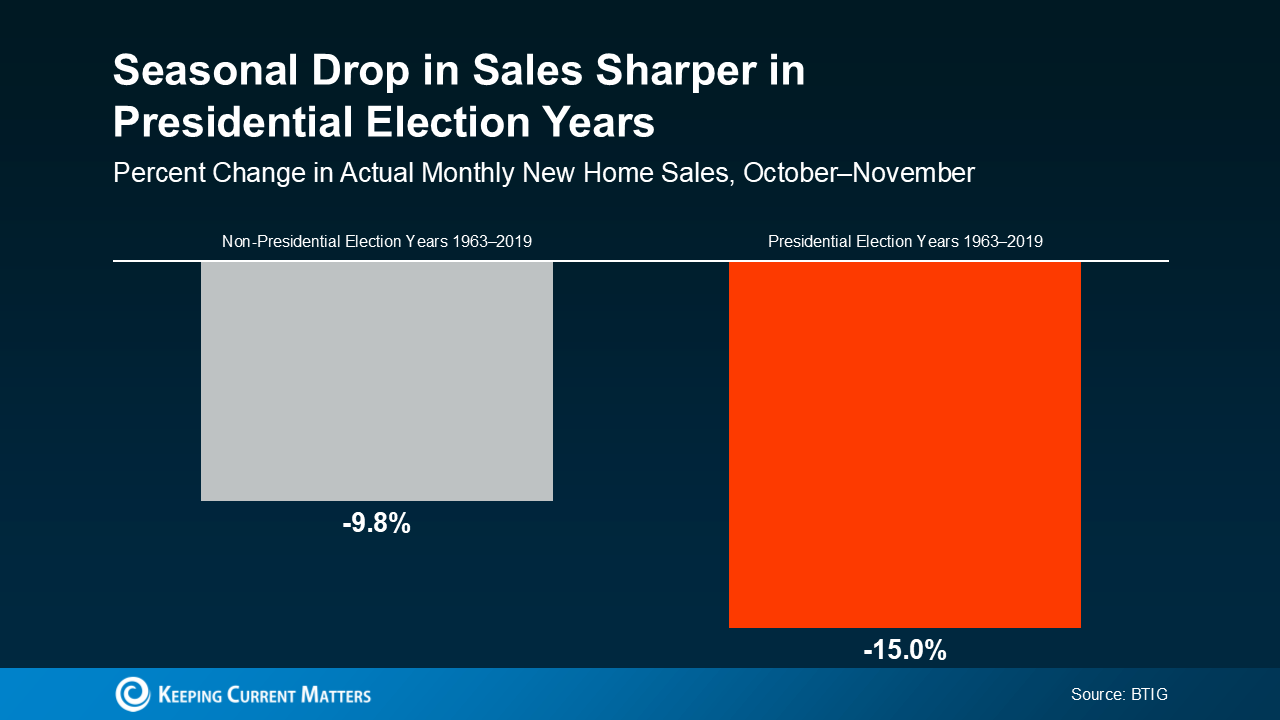 Why? Uncertainty. Many consumers hold off on making major decisions or purchases while they wait to see how the election will play out. It’s a pattern that’s shown up time and time again, and it’s particularly apparent for buyers and sellers in the housing market.
This year is no different. A recent survey from Redfin found that 23% of potential first-time homebuyers said they’re waiting until after the election to buy. That’s nearly a quarter of first-time buyers hitting the pause button, likely due to the same feelings of uncertainty.
Home Sales Bounce Back After the Election
The good news is these delayed sales aren’t lost forever—they’re just postponed. History shows sales tend to rebound after the election is over. In fact, home sales have actually increased 82% of the time in the year after the election (see chart below):
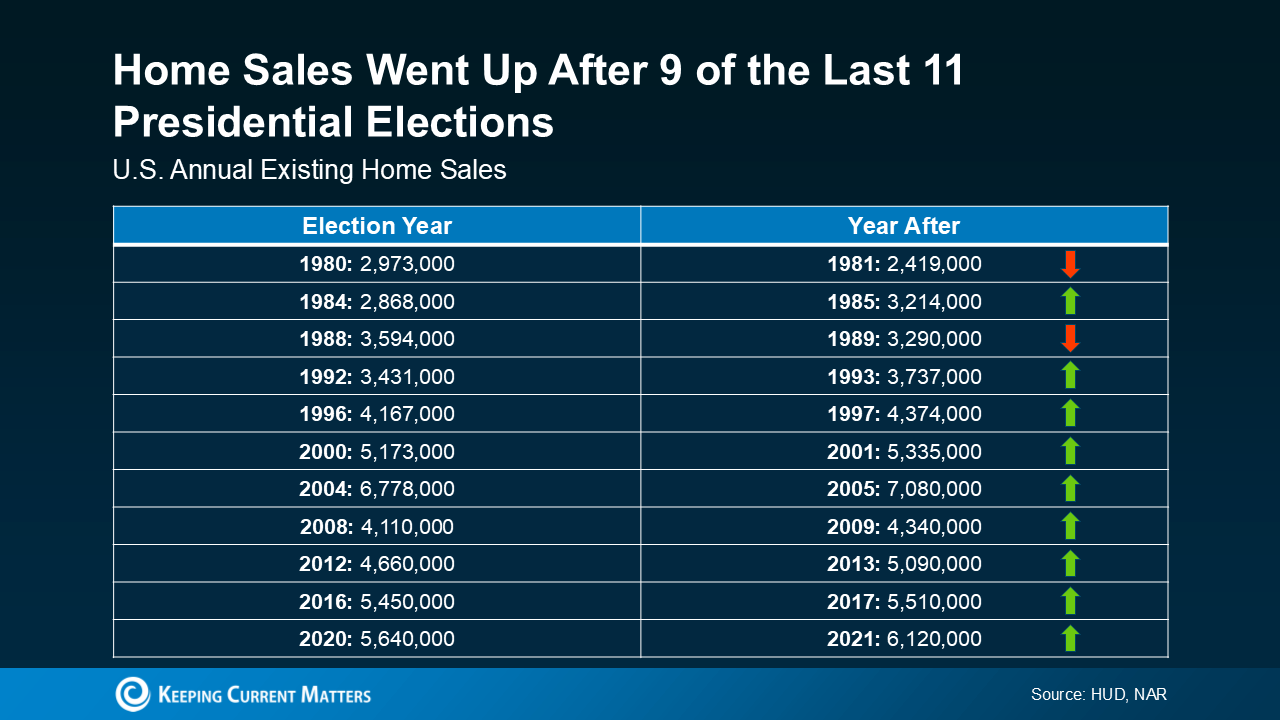 That’s because once the election dust settles, buyers and sellers have a sense of what’s ahead and generally feel more confident moving forward with their decisions. And that leads to a boost in home sales.
What To Expect in 2025
If history is any indicator, that means more homes will sell next year. And based on the latest forecasts, that’s exactly what you should expect. As the graph below shows, the housing market is on pace to sell a total of 4.6 million homes this year, and projections are for 5.2 million total sales next year (see graph below):
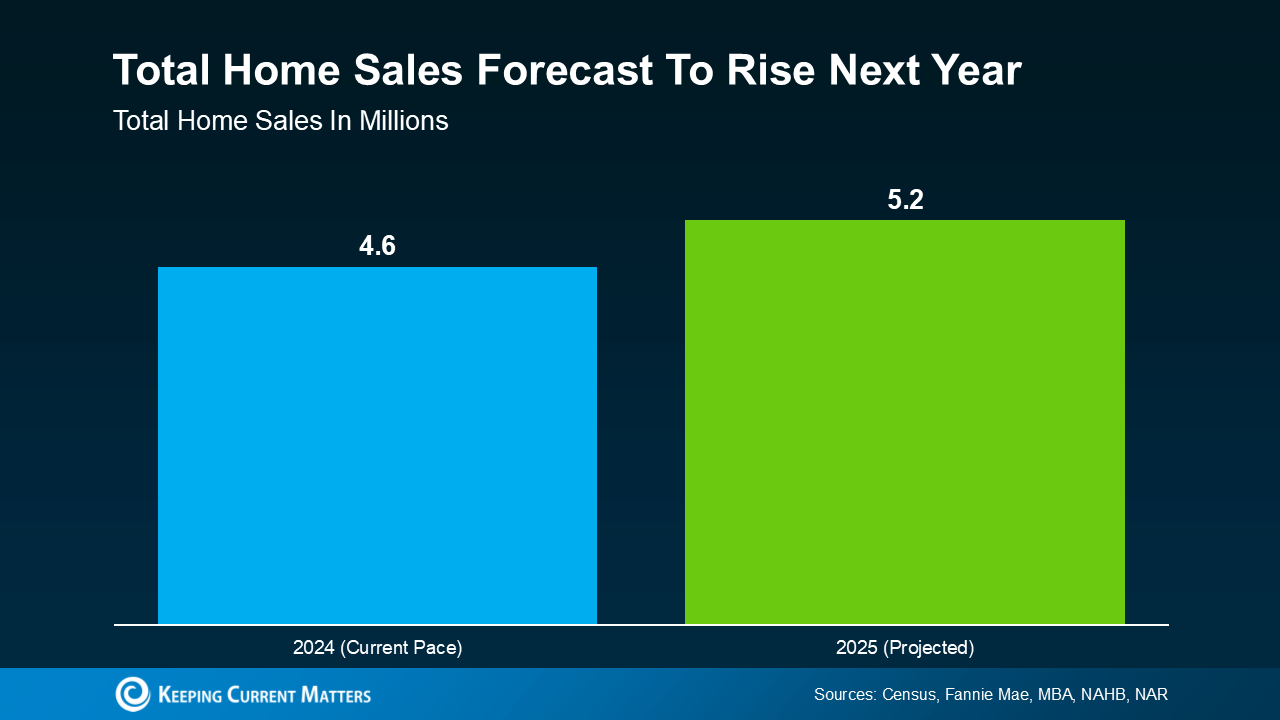 And that aligns with the typical pattern of post-election rebounds.
So, while it might feel like the market is slowing down right now, it’s more of a temporary dip rather than a long-term trend. As has been the case before, once the election uncertainty passes, buyers and sellers will return to the market.
Bottom Line
It’s important to remember that while election years often bring a short-term slowdown in the housing market, the pause is usually temporary. Those sales are not lost. Data shows home sales typically increase the year after a Presidential election, and current forecasts indicate 2025 will be no different. If you’re waiting for a clearer picture before making a move, just know that the market is expected to pick up speed in the months ahead.
