
by Sally-Anne Peterson | Oct 30, 2025 | Agent Value
As the leaves begin to change and the year winds down, October offers a natural pause a moment to reflect, reset, and refocus. For many, it’s a season of transition, making it an ideal time to revisit your housing goals in real estate. Whether you’re thinking about buying, selling, investing, or simply planning for the future, October provides a strategic window to take stock and make informed decisions.
🍂 A Seasonal Shift in Perspective
Fall tends to bring a shift in mindset. The fast pace of summer slows, routines settle, and people begin thinking ahead to the holidays and the new year. This seasonal rhythm creates space to evaluate your current living situation and consider whether it still aligns with your lifestyle, financial goals, and long-term plans.
Ask yourself:
- Is my current home meeting my needs?
- Am I ready to explore a new neighborhood or downsize?
- Should I prepare to buy in the spring or act sooner?
October is an ideal time to ask these questions before the holiday rush and year-end distractions take hold.
📊 Market Awareness Without the Pressure
While spring and summer are traditionally busy seasons in real estate, fall offers a quieter, more focused environment. Buyers and sellers active in October tend to be serious and motivated, which can lead to smoother negotiations and more meaningful conversations.
For buyers, this means:
- Less competition compared to peak seasons
- More time to evaluate properties without pressure
- Opportunities to lock in favorable financing before year-end
For sellers, it’s a chance to:
- Showcase your home with cozy, seasonal staging
- Appeal to buyers looking to settle before the holidays
- Take advantage of lower inventory and motivated buyers
🧭 Planning for 2026
Revisiting your real estate goals in October isn’t just about immediate action—it’s also about strategic planning. If you’re considering a move in early 2026, now is the time to:
- Review your credit and financial readiness
- Explore neighborhoods and school districts
- Connect with a real estate professional to map out a timeline
By starting the conversation now, you’ll be better positioned to act confidently when the time is right.
💬 Reconnect with Your Agent
If you’ve worked with a real estate agent in the past, October is a great time to check in. A quick conversation can help you:
- Understand current market conditions
- Get personalized advice based on your goals
- Learn about upcoming listings or opportunities
Even if you’re not ready to make a move, staying in touch keeps you informed and empowered.
🍁 Final Thoughts
October isn’t just about pumpkins and falling leaves it’s about clarity. It’s a season that invites reflection and forward thinking, making it the perfect time to revisit your real estate goals. Whether you’re dreaming of a new home, preparing to sell, or simply exploring your options, this month offers the space and perspective to make smart, intentional decisions.
If you’re ready to talk about your next steps or want to explore what’s possible, I’m here to help.

by Sally-Anne Peterson | Apr 4, 2025 | Agent Value, Buying Tips, For Buyers
In recent years, the real estate market has been heavily tilted in favor of sellers, with bidding wars and limited inventory. However, the tables have started to turn. Buyers now have more negotiation power than they have in a while. Whether it’s due to higher interest rates, economic shifts, or a rise in housing inventory, buyers are now in a stronger position to negotiate favorable terms when purchasing a home. If you’re in the market to buy a property, here’s how to make the most of this shift and use your negotiating power to your advantage.
1. Offer Below the Asking Price
In a more balanced market, it’s no longer a given that you need to offer full price (or even more) to secure a property. Sellers who are motivated to sell, especially those who have had their homes listed for a while, may be open to negotiating the price.
How to Use It: When considering a home, assess the listing price and the condition of the property. If the home has been on the market for some time or has some issues that need attention, start with an offer that is below the asking price. Offering slightly lower can help you secure a better deal, especially if you’re in a position to act quickly and show you’re serious.
2. Request Repairs or Credits
With increased buyer leverage, sellers are often more willing to address issues that arise during the home inspection. If the inspection uncovers problems—such as outdated electrical systems, plumbing issues, or a worn roof—you can use these findings to negotiate.
How to Use It: After an inspection, don’t hesitate to ask the seller for repairs before closing or request a credit at closing to cover the cost of repairs. You can also negotiate a reduced price if you’re willing to handle the repairs yourself. This can be an effective way to get the home you want while ensuring you don’t end up with unexpected expenses post-purchase.
3. Ask for Closing Cost Assistance
Closing costs can add up quickly, sometimes totaling thousands of dollars. Many buyers are unaware that sellers might be willing to help cover some of these costs, especially when there’s less competition in the market.
How to Use It: Don’t be afraid to ask the seller to contribute toward closing costs. This could include covering some or all of the buyer’s closing expenses, such as lender fees, title insurance, or escrow charges. Many sellers are willing to negotiate this if they are motivated to sell. This request can help ease your financial burden and make the overall transaction more affordable.
4. Be Ready to Walk Away
Sometimes, the best negotiating tactic is being willing to walk away if the deal doesn’t meet your expectations. This is particularly powerful when you are in a market with more homes to choose from.
How to Use It: If a seller isn’t meeting your terms, show them that you’re serious about getting the right deal by being prepared to walk away. If the seller is motivated, they may come back with a better offer to keep you engaged. Knowing when to walk away—and not being afraid to do so—gives you more control during negotiations.
5. Leverage Timing to Your Advantage
Timing is crucial when it comes to negotiating a home purchase. Generally, sellers are more willing to negotiate during slower seasons, such as late fall or winter, when there’s less demand for homes. Buyers can use this time to secure better deals or gain more favorable terms.
How to Use It: If you’re flexible on timing, consider shopping for a home during the off-season when there are fewer buyers. During these times, you might find less competition, more room for negotiation, and even the possibility of sellers reducing their asking prices to close quickly.
6. Be Patient and Strategic
With increased negotiation power, you don’t have to rush into making offers. Take your time to review properties, and don’t be afraid to let a few listings go if they don’t meet your needs or budget. The more strategic you are, the more you’ll be able to leverage market conditions in your favor.
How to Use It: Take your time to consider multiple properties and make well-thought-out offers. If you see a home you like, but it doesn’t check every box, think about how you can use your negotiation power to make it work. Whether it’s negotiating on price, repairs, or closing costs, you can still secure a great deal even if the house isn’t perfect.

by Sally-Anne Peterson | Oct 22, 2024 | Agent Value, For Sellers
If your goal is to sell your house in 2025, now’s the time to start prepping. Even though it might seem like there’s plenty of time between now and the new year, you should get a head start on any updates or repairs you want to make now. As Danielle Hale, Chief Economist at Realtor.com, says:
“ . . . now is the time to start thinking about what you need for your next home and then taking those steps to prepare to list . . . We have survey data that says 47 percent of sellers are taking longer than a month to get their home ready to sell, so getting them to start that process early can mean more flexibility.”
By starting your prep work early, you’ll give yourself plenty of time to get your house market-ready by the end of the year. But be sure to partner with a great agent before you get started, so you have expert insight into what repairs are worth it based on your local market.
Why Starting Early Is Key
To get the best price and sell quickly, it’s important that your home looks its best. And that means it’s up to you to make the necessary repairs, declutter, and even consider updates that could add value as part of getting your house ready to list.
By starting now, you can tackle things one task at a time. Whether it’s fixing that leaky faucet, refreshing your landscaping, or painting a room, getting an early start gives you the flexibility to do the job right and with as little stress as possible. Because, if you wait to knock items off your list later on, they could quickly stack up and get overwhelming. As Realtor.com explains:
“There are some important repairs to make before selling a house, so don’t be in too much of a hurry to get your home listed … if you move too fast, buyers see right through the fact that you skipped important home renovations. And this . . . might end up costing you time and money.”
What Should You Focus On?
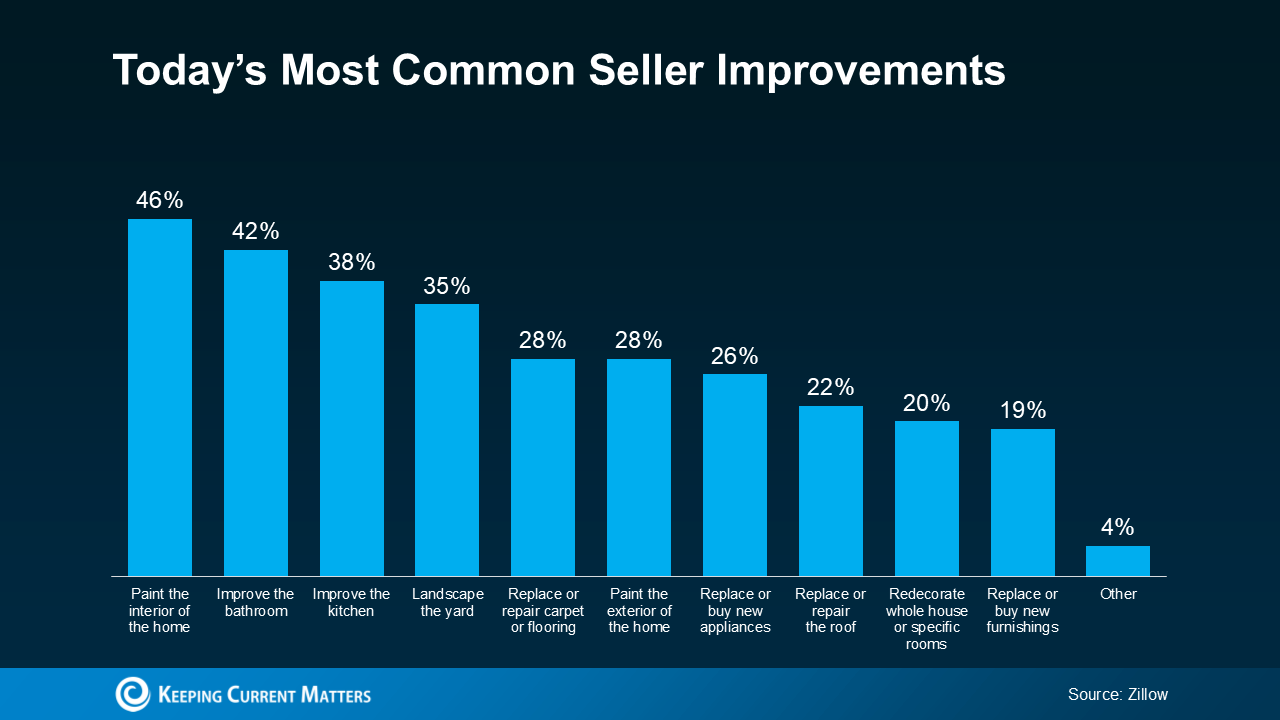
Feeling motivated to start chipping away at that to-do list, but not sure where to start? Here’s a look at the most common improvements other sellers are making today (see graph below):
 The Importance of Working with a Local Agent
And while that data gives you a starting point, it shouldn’t be seen as a comprehensive list. What buyers want in your area may be different, and only a local agent will have this in-depth understanding.
For example, if homes in your area are selling quickly with updated kitchens, your agent might suggest focusing on minor kitchen improvements rather than spending money on other areas that won’t offer as much return. They’ll also help you figure out if tackling larger projects, such as replacing your roof or upgrading your HVAC system, is worth it based on other recently sold homes. As Point says:
“Not all renovations are created equal, and focusing on upgrades that offer the highest potential for increasing your home’s value is key.”
And remember, it’s not just big-ticket items that can have an impact. Your agent will also speak to some of the smaller details – like cleaning up your yard, adding fresh mulch, or painting your front door – to make a real difference in how buyers feel about your home. This type of expert eye is crucial to help your house sell fast and for top dollar.
Bottom Line
Thinking of selling your house next year? Don’t wait until the last minute to get it ready. By getting a head start now, you can ensure everything is in place by the time the new year rolls around.
Need advice on what to tackle first? Connect with a local agent.
